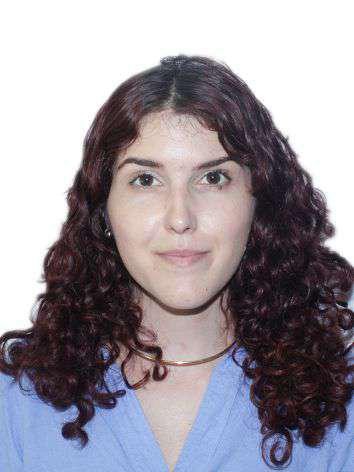
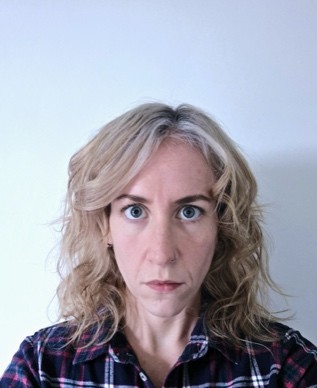
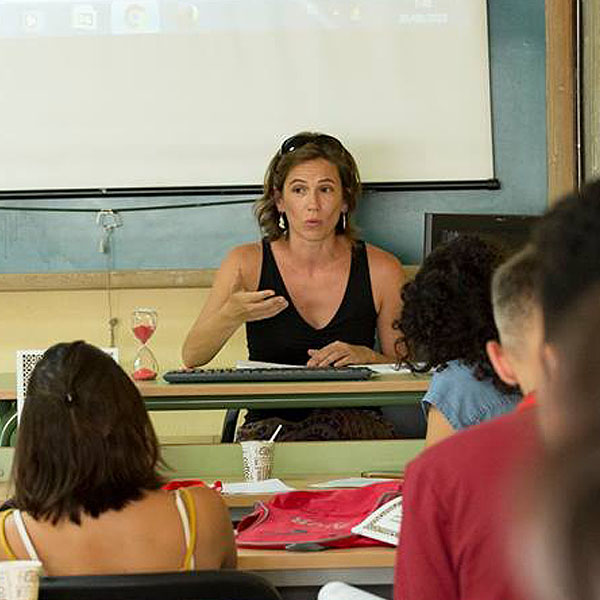
She is an Associate Professor in the Department of Audiovisual Communication and Advertising at the Faculty of Social Sciences and Communication of the University of the Basque Country (UPV/EHU). She holds a PhD in Audiovisual Communication (UPV/EHU, cum laude, dissertation written in Basque), a Master’s degree in Theory and Practice of Creative Documentary (Autonomous University of Barcelona), a Master’s degree in Social Communication (UPV/EHU), and a Bachelor’s degree in Audiovisual Communication (UPV/EHU). She teaches theoretical and practical courses on film and documentary in Basque and Spanish. In parallel, she develops her own creative projects, focusing on socially themed documentaries. Her main research lines include proximity communication, minority languages, film festivals, Basque cinema, and Small Cinemas. She has been awarded two six-year research periods (sexenios) (2013–2018) and (2019–2024). Her work as a filmmaker and her close contact with the audiovisual industry are fundamental to the Atmósfera laboratory project recently created by the GAIT group. Her experience as a documentary filmmaker and her professional networks are of particular relevance for this laboratory, where knowledge transfer will be a key element in giving visibility to the group’s research.
Archives: Miembros
Personas que trabajan en proyectos del CEIC
She is an Associate Professor in the Department of Audiovisual Communication and Advertising at the Faculty of Social Sciences and Communication of the University of the Basque Country (UPV/EHU), with accreditation for Full Professorship. She holds a PhD in Film History (Autonomous University of Madrid, cum laude, International Mention), a Master’s degree in Theory and Practice of Creative Documentary (Autonomous University of Barcelona), and Bachelor’s degrees in Audiovisual Communication (UPV/EHU) and Social and Cultural Anthropology (UNED). She writes and teaches in English, Basque, and Spanish, and speaks French, Modern Greek, and Italian. Her technical skills in the audiovisual field (such as video recording and editing, graphic design, web design, and database design) are key to collaboration in the development of the Atmósfera laboratory (created in 2024), one of GAIT’s core research lines.
She is an expert in film festivals and documentary cinema with an international profile, supported by her participation in numerous research networks and international conferences, research stays at foreign universities, archives, film institutes, and international festivals, as well as her internationally impactful publications (with publishers such as Palgrave Macmillan, Amsterdam University Press, and L’Harmattan, and in high-impact academic journals such as Studies in European Cinema and Arte, Individuo y Sociedad).
She is Deputy Director for Internationalization and Communication at the UPV/EHU Doctoral School. She is part of the management team together with the co-Principal Investigator of the present research group, where they develop strategies for the internationalization of postgraduate studies through international agreements and cotutelle arrangements, collaborating with consortia such as Enlight and Euskampus. In addition, together with the co-PI, she has published studies on women’s supervision of doctoral theses. Since 2023, she has been an elected member of the editorial committee of the European Network of Cinema and Media Studies, the largest film studies association in Europe, and is the founder and coordinator of the Documentary Workgroup (2009–2025).
She is the Principal Investigator of three research projects: (1) IkerFESTS (on film and audiovisual festivals in the Basque context, funded by the UPV/EHU); (2) Encuentros en el Zinemaldia (funded by the Gipuzkoa Provincial Council for the study of the historical archive of the San Sebastián International Film Festival); and (3) IDFmap (on documentary film institutes worldwide, developed at the Institute for Advanced Studies in the Humanities at the University of Edinburgh, and funded by the Basque Government and IASH).
Carmelo Moreno del Río is a Full Professor of Political Science in the Department of Political Science and Public Administration at the University of the Basque Country (UPV/EHU).
His research interests include contemporary political theory, political discourse analysis, collective identity, nationalism and secessionism, conceptual history in political theory, and, more recently, the relationship between humour and politics. He has carried out research stays at the Eurolab of the GESIS–Leibniz Institute (Germany) and at the University of Reno, among others. He was a member of the Consolidated High-Performance Research Group known as the Euskometer Team from its foundation in 1994 until its conclusion in December 2018. He was also the principal investigator of the R&D project “Political humour as a factor of social cohesion in Spain” (2009–2012), funded by the Ministry of Education. Between 2018 and 2021, he participated in the research project entitled “An interdisciplinary approach to the political languages of Euro-American modernity. Spatio-temporal dimensions”, directed by Professor Javier Fernández-Sebastián. Between 2022 and 2024, he joined a European network of universities which, under the umbrella of the Enlight Network—of which the University of the Basque Country is a member—initiated an international research programme on the relationship between humour and politics. This network led to the HACIDA project (HACIDA – Humor and Conflict in the Digital Age), coordinated by Andrew Bricker from Ghent University. This project became the seed of a HORIZON project funded by the European Commission entitled DELIAH (DELIAH – Democratic Literacy and Humor), which began in March 2025 and has an estimated duration of four years. The project involves Ghent University (Belgium), the University of Groningen (the Netherlands), Comenius University of Bratislava (Slovakia), the University of Göttingen (Germany), the University of Tartu (Estonia), as well as the University of the Basque Country.
In the field of teaching, he coordinated the doctoral programme “Government and Comparative Political Analysis” between 2000 and 2007. During this period, the programme received the Ministry of Education’s Quality Award on three occasions (academic years 2002–2003, 2004–2005, and 2005–2006), working in collaboration with around twenty Political Science departments, both in Spain and internationally.
Among his most recent works are: Moreno, Carmelo (2025): “The role of time in political theories of justice: some notes on Hannah Arendt, John Rawls, Michael Walzer and Iris Marion Young,” in J. Fernández-Sebastián and Javier Tajadura (eds.), Tiempos de la Historia, tiempos de la justicia, Madrid, Marcial Pons, pp. 123–144; Moreno, Carmelo (2024): “Thirty years of political theory in Spain,” in J. Montabes, A. Garrido and B. Aldeguer (eds.), Political Science in Spain. Thirty Years of the Spanish Association of Political Science and Public Administration, Madrid, Centre for Political and Constitutional Studies, pp. 101–119; Moreno, Carmelo (2023): “Meritocracy,” Eunomía. Journal of the Culture of Legality, vol. 25, pp. 242–261; Moreno, Carmelo (2022): “Effects of political satire through television infotainment programmes in Spain. Is humour just for laughter, or is there something more at stake?”, Papeles del CEIC, vol. 2022/2, paper 272, pp. 1–22; Moreno, Carmelo (2022): “Satirical humour, the press and caricature in Spain, 1836–1874. A theoretical approach,” in G. Capellán (ed.), Drawing Discourses, Constructing Imaginaries. Press and Political Caricature in Spain (1836–1874), Santander, University of Cantabria, pp. 557–572; Moreno, Carmelo and Bartolomé, Edurne (2021): “Feelings towards politics in the Basque Country, 1995–2019. Explanatory variables, the effect of affective polarization and the importance of context,” Spanish Journal of Political Science, vol. 58, pp. 141–173; Moreno, Carmelo (2020): “Secession as a long-term procedure versus the demand for a single referendum. A regulatory proposal,” Journal of Political Studies, vol. 188, pp. 97–126; Moreno, Carmelo (2020): “The Spanish Plurinational Labyrinth. Practical reasons for criticising the nationalist bias of others while ignoring one’s own nationalist position,” Genealogy, vol. 4, no. 1, pp. 17–38.
He holds a Bachelor’s degree in Sociology from the University of Buenos Aires, a Master’s degree in Sociology of Culture (IDAES/UNSAM), and a PhD in Social Sciences (UBA). He is an independent researcher at CONICET and an Associate Professor of Classical Social Theory I and Digital Cultures, Politics and Education in the Sociology program at the Faculty of Humanities and Educational Sciences (UNLP).
Among his publications, the following books stand out: Después del Conectar Igualdad. Tecnobiografías juveniles en el Gran La Plata (UNLP-IdIHCS, 2022); Inclusión Digital (co-authored with Rosalía Winocur, Teseo, 2016); and Estudios sobre Consumos Culturales en la Argentina Contemporánea (co-authored with Mabel Grillo and Vanina Papalini, CLACSO, 2017). In addition, he has numerous publications in scientific journals, books, and conference proceedings.
Management experience:
Member of the Governing Council of the Institute of Research in Humanities and Social Sciences (IdIHCS, UNLP/CONICET), June 2024–present.
Head of the Department of Sociology at the National University of La Plata, Faculty of Humanities and Educational Sciences (2018–2023).
Representative on the Departmental Advisory Board for the Professors’ body of the Department of Sociology at the National University of La Plata, Faculty of Humanities and Educational Sciences, 2017–2018 and 2023–2024.
Director of the journal Cuestiones de Sociología, Faculty of Humanities and Educational Sciences, National University of La Plata (2018–2023).
Recent research projects directed:
UNLP R&D Project: “Social inequalities and educational trajectories in times of pandemic: appropriation of digital technologies by young university students in La Plata and Greater La Plata during the pre-COVID-19–post-COVID-19 period.” 2023–2026.
LATAM DIGITAL: “Urban digital exclusion. Case studies in Mexico, Brazil, and Argentina.” 2021–2022.
LATAM DIGITAL: “Social inequalities in times of pandemic: a study of access, connectivity, and appropriation of ICTs in the educational and labor spheres in Argentina.” 2020–2021.
PDTS 0551 COFECYT COVID FEDERAL: “Pedagogical continuity in times of pandemic: a study of distance education modalities and their impact on social inequalities in the Province of Buenos Aires.” 2020–2021.
UNLP R&D Project: “Digital inequalities in contemporary Argentina. Actors, appropriations, and public policies.” 2020–2022.
She holds a Bachelor’s degree in Fine Arts, specializing in Audiovisuals (2010), and a Master’s degree in Research in Contemporary Art (2012). After completing a predoctoral fellowship at the University of the Basque Country (UPV/EHU), she obtained her PhD in 2021 in the Department of Drawing at the Faculty of Fine Arts, with the dissertation “Trial, Repetition, Obsession. 2010–2020.” She is currently a visual artist and Associate Professor in the Department of Painting at the Faculty of Fine Arts of the UPV/EHU.
Her work focuses on drawing and its inertias from a broad perspective that also branches into writing, sculpture, and installation. She addresses the circulation between technique and desire, as well as perceptions of lucidity, hallucination, identity, and interiority. A certain narrative impulse is strongly present in her practice, linking the everyday, the manual, and the written word.
Her work has been exhibited in numerous venues. She has participated internationally in spaces such as Casino Luxembourg (Luxembourg, 2025), CAT (Berlin, 2023), Espacio Vaga (São Miguel, Azores, 2022), Galleria Nappa and Studio Mustanapa (Rovaniemi, 2021), Lítost Gallery (Prague, 2020), Westfälischer Kunstverein (Münster, 2019), and Altes Finanzamt (Berlin, 2015). She has also shown her work in institutions such as Artium Museoa (solo exhibition, 2022), and in group exhibitions at the Bilbao Fine Arts Museum (2018 and 2020), Azkuna Zentroa (Bilbao, 2018), Centro Huarte (2016), Tabakalera (Donostia, 2018), Espai 01 (Olot, 2012), and Montehermoso (Vitoria-Gasteiz, 2010). She has held solo exhibitions at well-known galleries such as Carreras Mugica (2015) and Ethall (Barcelona, 2018), and has participated in group exhibitions at Marta Cervera (2023), Moisés Pérez de Albéniz (Madrid, 2020), and Bombón Projects (Barcelona, 2019). She is represented by Galería Fermay in Palma de Mallorca. Recently, she published a book of poems with Brillo Editorial titled Ghani, ghani (2025).
She has received national distinctions such as the Gure Artea Award for Creative Activity (2023) and one of the Cervezas Alhambra Awards (2022). Other notable regional recognitions include the Egile Visual Arts Award (2019), the Special Prize for Emerging Artists of Gipuzkoa (2016), APA Eremuak (2023), the Juan de Otaola y Pérez de Saracho Grant (2016), a two-month residency grant in Beijing offered by M.A Estudios in collaboration with the UPV/EHU and the Basque Government (2012), and the Montehermoso Grant for Art and Research (2009). Her work is part of collections such as the Shared Collection of the Basque Government (2022), the Bilbao Fine Arts Museum (2020), Artium Museum of Vitoria-Gasteiz (2021), the Candela Soldevilla Collection (2021), Cervezas Alhambra (2022), and the Hamaca Collection (2009).
She has led several experimental drawing workshops such as Atardecer, Zoom, Mano, Zoom, Ojo at Matadero de Azkoitia, at the UPV/EHU, and at Tabakalera (2016–2018), as well as “Cabeza-mano. El buen dibujo” within the Bisitariak sessions in Donostia (2014). These workshops consisted of a series of exercises based on pushing limits and learning to draw under suggestion, with the aim of freeing thought and intuition in order to recognize the medium.
PhD in Sociology (2016) and Associate Professor in the Department of Sociology and Social Work at the University of the Basque Country (EHU). Following the tradition of science, technology, and society studies, and particularly new materialisms, his research interests focus on mediation processes across different domains, including literature, gastronomy, and cultural and technological infrastructures. In response to the sociomaterial and emergent nature of the phenomena he studies, he is exploring performative sociological practices, researching through design and intervention. From this theoretical and methodological sensitivity, he is currently responsible for the collaborative project HarilkAI, aimed at prototyping an artificial intelligence platform for the social sciences and communication studies. He was also a founding partner of the social research cooperative Indaga.
Further information here
PhD in Sociology (1999) and Associate Professor in the Department of Social Psychology at the University of the Basque Country (EHU). Throughout his research career, he has mainly addressed three areas from a social psychology perspective: the social psychology of power and legitimation, processes of psychologization in contemporary society, and the status and value of minoritized linguistic identities in the Basque case. In addition, within philosophy, he has worked on personal autonomy, the subject in Modernity, and the construction of political agency. These research interests have resulted in the following books, in addition to numerous articles and contributions to edited volumes: Komunikazioaren Gizarte Psikologia (UEU, 2004); El poder en busca de autoridad (with Mikel Villarreal, Educa, Alicante, 2009); Norberaren autonomia krisian (Pamiela, Pamplona, 2012); Identitatea eta anomalia (Pamiela, Pamplona, 2015); Subjektuaren zainak eta adarrak. Subjektua Mendebaldeko filosofia hegemonikoan, Modernitatetik Globalizazio ostera (UEU, 2024).
Further information here
PhD in Political Science and Sociology (2008) and Associate Professor in the Department of Sociology and Social Work at the University of the Basque Country (EHU). She specializes in discourse analysis and advanced qualitative social research methods, as well as in the ethics of qualitative social research. Her research has addressed social cohesion and community development from a social innovation perspective, as well as practices aimed at overcoming inequalities in vulnerable populations. She currently focuses on epistemological, methodological, and ethical innovation in social research using visual materials applied to the field of culture. She is the author of books, book chapters (published by academic presses listed in Scholarly Publishers), and scientific articles in journals indexed in Web of Science and Scopus. Notable publications include: Investigación social cualitativa y dilemas éticos: De la ética vacía a la ética situada (Empiria. Revista de Metodología de Ciencias Sociales, no. 34, 2016); Regímenes de movilidad y expropiación del tiempo: la espera como cronopolítica (Arbor, 194(788), a453, 2018); Reflexiones sobre archivo y análisis secundario de datos cualitativos: perspectiva ética, metodológica y epistemológica (Investigação Qualitativa em Ciências Sociais / Investigación Cualitativa en Ciencias Sociales, CIAIQ2019 Proceedings, Vol. 3, 2019); (with Andrés Dávila) Infortunio de la investigación social cualitativa en la era del capitalismo académico (New Trends in Qualitative Research, 4, 2020); and (with Sandra González) From compass to radar: An innovative methodological strategy for researching cultural innovation (European Public & Social Innovation Review, 7(2), 2022).
Further information here
Teresa Casas Grille is an early-career sociologist with a strong academic foundation, a developing publication record, and growing experience in interdisciplinary and collaborative research. She is a predoctoral researcher in the Department of Sociology and Social Work at the University of the Basque Country (UPV/EHU), affiliated with the Doctoral Program in Models and Areas of Research in Social Sciences, where she continues to develop research on legislative processes, discourse analysis, and the emotional and symbolic dimensions of criminal lawmaking in contexts of institutional crisis, as well as ideological and emotional polarization.
She holds a Master’s degree in the Sociology of Law from Oñati’s International Institute for the Sociology of Law (IISL Oñati, EHU–International Sociological Association), where she graduated with a GPA of 9.33/10. Her Master’s thesis (2025), “La construcción de agendas en el discurso legislativo. Ley del solo sí es sí: un análisis de las estrategias discursivas y sus efectos políticos”, examined how parliamentary discourse shaped the legislative process of Spain’s “Only Yes Means Yes” law against gender violence. Supervised by Ignacia Perugorría, it was awarded a grade of 9.7/10 and received the André-Jean Arnaud Prize for the best Master’s thesis of the Oñati International Master’s in Sociology of Law.
She previously obtained a Bachelor’s degree in Sociology (2024) from the University of A Coruña (UDC), graduating top of her class with a GPA of 9.0075/10. During her undergraduate studies, she received the 2023–2024 Extraordinary Bachelor’s Degree Award (Premio Extraordinario de Grado) and the 2024 Academic Excellence Award (Premio Fin de Carrera a la Excelencia Académica) from the Xunta de Galicia. Her undergraduate dissertation investigated how Spain’s “Only Yes Means Yes” law functions not only as a legal reform but also as a vehicle of symbolic politics and punitive populism.
Her research interests lie at the intersection of socio-legal studies, political sociology, gender studies, and environmental justice. In 2024, she worked as a research assistant for the project VICES: Collective Violence during the Independence War, funded by the Spanish Ministry of Science and Innovation, contributing to archival research, transcription and editing of historical documents, database preparation, and outreach activities.
She is the author of a forthcoming article in Justice, Power and Resistance (Bristol University Press), entitled “The Illusion of Green Progress: Galicia’s Wind Power Expansion as a State-Corporate Crime”, which draws on green criminology and sociolegal theory to examine socio-ecological conflicts linked to the imposition of “green growth” narratives in Galicia’s wind energy sector. She is also preparing an article for the Revista Española de Sociología (RES) that examines how the parliamentary debate surrounding the “Only Yes Means Yes” law transformed criminal law into a space of symbolic and emotional contestation in a context of intense political polarization.
She has also collaborated with the Anthropology Association of the Spanish State (ASAEE), volunteering in the organization and coordination of its conferences, where she gained valuable experience in academic logistics and in fostering interdisciplinary scholarly exchange.
ORCID: 0009-0003-4201-3432
PhD in Sociology (2015) and Associate Professor in the Department of Sociology and Social Work at the University of the Basque Country (EHU). She is currently an Associate Professor in the same department and a member of the InnoKlab research group at EHU. She has been a visiting researcher at the University of Melbourne (Australia) and a postdoctoral researcher funded by the Basque Government at the University of Southampton (United Kingdom). She was a member of the High-Performance Research Group of the Basque University System INNOLAB/BERRILAB, participating in national research projects on innovation and social change, as well as on cultural and creative industries from the perspective of contemporary processes of subjectivation.
In her doctoral research, she explored the transformations of the Left Bank of the Nervión River—Greater Bilbao, Biscay—through the narratives of its inhabitants regarding industrialization, its crisis, and urban regeneration. Her postdoctoral research, in turn, addressed experiential knowledge and practices of self-management in relation to psychic suffering, drawing on alternative care ecosystems such as mutual support groups. Along these lines, she currently investigates forms of self-governance and care in the digital and food domains. She has published several works and presented papers at national and international conferences on the formation of spatial subjectivities, self-management, and experiential knowledge from care perspectives.
Ekoizpen: https://ekoizpen-zientifikoa.ehu.eus/investigadores/129665/detalle
Orcid: https://orcid.org/0000-0001-9264-6009
Further information here
Marcos Engelken-Jorge holds a degree in Political Science and Public Administration from the University of the Basque Country, UPV/EHU, where he also gained his PhD, and holds a postgraduate degree in ‘Advanced Methods of Applied Statistics’ (UNED). He has held various positions as a researcher and lecturer at UPV/EHU, has worked as a Marie Curie researcher at Humboldt University of Berlin with the project LearningDemoi (625592), and has provided support to participatory projects at local and European levels while working outside academia. His research interests lie in contemporary political theory, in particular critical theory and deliberative democracy, as well as in political sociology, with a special emphasis on the sociology of the public sphere and the study of populist mobilisations and discourses. He is currently working for the project Democratic Literacy and Humour, DELIAH (101177739), which examines the multifaceted role of humour in contemporary democracies, including its employment for the dissemination of hate speech and its use as a form of counter-speech.
His work has been published in journals such as Political Studies, European Journal of Social Theory, Critical Horizons and Journal of Political Ideologies. He is also the editor of books and author of book chapters published by publishers such as Tecnos and VS-Verlag/Springer, and he has contributed to events organised by the International Political Science Association, European Consortium for Political Research and the Spanish Association of Political Science and Public Administration.
Ekoizpen: https://ekoizpen-zientifikoa.ehu.eus/investigadores/130768/detalle
PhD in Sociology (2011) and Associate Professor in the Department of Sociology and Social Work at the University of the Basque Country (UPV/EHU), Faculty of Law. He has accumulated two decades of research and teaching in the sociology of innovation, economic sociology, and the sociology of social and cultural change, studying the intersection of innovation, society, and culture across various economic sectors, as well as structural change in the Basque Country and its effects on different institutional domains. He has participated in both national and regional research projects on these topics and has published more than 40 contributions, including books, book chapters, and scientific articles. He has also been involved in knowledge-transfer activities with public and private entities and collaborates with organizations such as Eusko Ikaskuntza and the Soziolinguistika Klusterra. He is currently the director of the EHU lifelong learning master’s program Language Management in a Global Era: Keys to Innovation in the Revitalization of Basque and serves as EHU coordinator at the Ikerketa Elkargunea of Arantzazulab, which promotes collaborative research between EHU, Mondragon University, and the University of Deusto on political and democratic culture in the Basque Country.
Further information here
PhD in Sociology (2013) and Assistant Professor at the University of the Basque Country (Euskal Herriko Unibertsitatea, EHU). He is currently the Coordinator of the Bachelor’s Degree in Sociology at EHU. His career combines two decades of research and teaching in the field of the social sciences, with particular attention to digital culture, science and technology studies, emerging technological devices, videogame artifacts, and the search for methodological tools and ways of narrating research beyond traditional modes of scientific knowledge production. He has actively collaborated in knowledge-transfer projects with institutions such as Tabakalera, Azkuna Zentroa, and the “la Caixa” Foundation. He has an extensive academic output, including nearly fifty articles in high-impact international journals, as well as book chapters and books published by leading academic presses. He is the author of Identidad Gamer (AnaitGames, 1st ed. 2018; 2nd ed. 2021) and co-author of Video Games as Culture (Routledge, 2018), Los videojuegos como cultura (Ampersand, 2023), and Un mes en Tinder siendo mujer gamer (Applehead, 2021). He is also the editor of Ocio y tecnología digital (University of Deusto, 2017).
Further information here
Oihane Ibarguren Egibar (Zestoa, 2000) is a social educator and anthropologist. She earned her degree in Social Education from the University of the Basque Country (UPV/EHU) in 2022, with a Bachelor’s thesis entitled Building Inclusion through Theatre: Intervention with People with Autism Spectrum Disorder at Gautena in Azpeitia. In this project, she designed and implemented theatre workshops to explore the potential of art as a tool for community inclusion for people with autism. After observing the positive outcomes of the intervention, she promoted the continuation of the program at Gautena, where she worked as an educator for two years.
In the same year, she began a Master’s degree in Social Anthropology at UPV/EHU, which she completed in 2024 with the thesis Circular Conflict in a Public Square: A Taurine Ethnography of Zestoa. This research analyses the bullfighting festivities of her hometown as a site of both collective and individual conflict and marked the starting point for the line of research she is currently developing in her doctoral dissertation.
Since May 2025, Oihane has been a predoctoral researcher in the Section of Philosophy of Values and Social Anthropology at UPV/EHU, within the Doctoral Programme in Feminist and Gender Studies. She is a member of the Social Change Research Group (GAIT) and of the visual laboratory Atmosfera, where she continues her ethnographic work on the symbolic and affective conflicts linked to the bullfighting traditions of Zestoa. Her aim is to understand the diverse voices, experiences, and tensions that shape this phenomenon, contributing new tools for its critical and contextualised analysis.
Prior to beginning her doctoral studies, she took part in the organisation of the 27th Conference of the Ankulegi Association of Anthropology, entitled Anthropology and Cinema: Between Experimentation and Collaboration (March 2025).
Nicolás Gutiérrez is a predoctoral researcher in Social Sciences at the University of the Basque Country (UPV/EHU). He is a junior researcher at the Centre for Collective Identity Studies (CEIC) and a member of the Basque university system research group Gizarte Aldaketa Ikerketa Taldea (GAIT).
He has worked as a research assistant at the Basque Centre for Climate Change (BC3), within Research Line 4 (Adaptation). He holds a Master’s degree in Globalisation and Development and a Master’s degree in Models and Areas of Research in Social Sciences (both from UPV/EHU), as well as a Bachelor’s degree in Basic Education with a specialisation in Social Sciences from the Francisco José de Caldas University (Colombia).
His professional experience includes teaching at primary and secondary education levels, as well as conducting research for development cooperation organisations. Nicolás combines pedagogical, social, ethical, ecological, and political competencies to carry out fieldwork, design and organise research projects, and engage with students and communities. His work is grounded in a solid theoretical and methodological framework and reflects a strong commitment to critical, proactive, and autonomous research.
He has participated in several research projects, including:
- One Health Observatory Lighthouse: HOBE Project (MCIN/AEI /10.13039/501100011033)
- Construyendo Sociedades Sostenibles: Mobilisation, Participation and Management of Socio-ecological Practices (MINECO, PID2021-126611NB-I00)
- Fulfilling the Transformative Potential of Nature-Based Solutions: From Fragmentation to Integration (IntegrateNbS) (EU Driving Urban Transitions Partnership, PCI2023-145970-2)
His academic work focuses on socio-environmental conflicts, with a particular interest in identity formation and the ecological interconnections among the actors involved. His research contributes to the development of participatory public policies in environmental governance, highlighting the valuation of aquatic ecosystems and socio-ecological practices in the context of climate change.
Passionate about the co-production of knowledge in natural environments, Nicolás currently resides in the mountainous region of the Basque Country.
Ekoizpen:
https://ekoizpen-zientifikoa.ehu.eus/proyectos/1302349/detalle
ORCID:
https://orcid.org/0009-0000-1415-0008
Phone:
+34 946 01 33 18
Graduate in Philosophy from the University of the Basque Country-Euskal Herriko Unibertsitatea, he has completed the Master of Advanced Studies in Philosophy at the Complutense University of Madrid. He has been awarded the Predoctoral Scholarship of the Basque Government and is about to develop his thesis on the philosophy of Miguel de Unamuno. His current research revolves around Unamuno’s concept of ‘intrahistoria’, but his topics of interest include questions related to ethics, aesthetics and theological reflection.
Graduated in Social Anthropology from the University of the Basque Country (2015, UPV). He won the 2015 Juan San Martin grant with Jaime Altuna for his research on Black Night and Halloween parties. The book The Resurrection of Dead Pumpkins* (2018, UEU) was published. He has a master’s degree in anthropology from the University of the Basque Country (2017, UPV). The 2017 Jose Miguel Barandiaran grant was awarded to Edurne Urrestarazu and Josu Ozaita, whose research was published in book format: wine culture network (2019, Diputación Foral de Álava). The final work of the master’s degree was also published in book format, the last rite of the Sanfermines: the run of Villavesa (2020, UEU). The book Gau Beltza was published, a literary story based on research (2020, Txalaparta). In addition to his academic work, he has carried out other research: the book Piparra was created on the basis of research on the piparra of Ibarra (2020, Ibarra City Council). In Berastegi he did a study of the shepherd culture: He took the form of an anthropology book of the Pastoril of Berastegi BE! (2022, Berastegi City Council). He has also made several presentations and articles.
She holds a BA in Psychology from the University of Granada (UGR, 2017). With a strong interest in the social field, she completed a Master’s degree in Social Intervention Psychology at the University of Deusto in 2019, during which she undertook an academic stay at Universidad Luis Amigó (Medellín, Colombia), where she became involved in community development and intervention work. She subsequently entered the labor market, working across a range of fields including mental health, education, career guidance, organizational psychology, and the third sector.
Since 2021, she has been a predoctoral researcher in training in the Department of Sociology and Social Work at the University of the Basque Country (UPV/EHU), as part of the predoctoral program of the Basque Government’s Department of Education. Her doctoral dissertation addresses the management of unemployment and employability in relation to the construction of new labor subjectivities. Her research interests lie in the Sociology of Work, Social Psychology, Critical Psychology, and Cultural Studies, from a qualitative perspective.
Associate researcher at Instituto Galego de Analise e Documentación Internacional and associate research at Centro de Estudios de Cooperación Internacional y Gestión Pública. Research interest: Diplomatic transformation, global politics and alternative diplomacies. PhD on Contemporary Political Processes at Santiago de Compostela University. I have been posdoctoral fellow at ISS at Erasmus of Rotterdam University, at Laboratorio de Análisis de Organizaciones y Movimientos Sociales del Centro de Investigaciones Interdisciplinarias en Ciencias y Humanidades (UNAM) and at the Centro de Estudios de la Identidad Colectiva from Basque Country University and San Martin and Arturo Jauretche universities in Argentina.
Project title: Globalización y activismos transnacionales del Sur. La incorporación de activistas latinoamericanos en los movimientos sociales globales en España
Period of the stay: July-September 2014
CEIC supervisor: Benjamín Tejerina
Home institution: Centro de Investigaciones Interdisciplinarias en Ciencias y Humanidades (CEIICH), Universidad Nacional Autónoma de México
PhD in Social Sciences, Latin American Faculty of Social Sciences (FLACSO), Argentina His areas of interest are: psychosocial interventions in contexts of political violence, war and post-conflict, body and subjectivity, violence, writing and representation; social memory, testimony, oblivion and silence; childhood and armed conflict.
Project title: La ética de la escucha
Period of the stay: mayo-julio 2017
CEIC supervisor: Gabriel Gatti
Home institution: Universidad de los Andes (Colombia)
Grants: Beca de estancias cortas posdoctorales, Fundación Carolina
For further information go to: Researchgate, Orcid.
PhD in Social Sciences at ITESM, Campus Monterrey, and a Masters in Modern and Contemporary History at the Instituto de Investigaciones Dr. José Ma. Luis Mora.
Project title: El presente del pasado y la construcción de identidad(es). Continuidades y cambios en la producción de los libros de texto de historia de México de Educación Secundaria (1993-2012)
CEIC supervisor: Ignacio Irazuzta
Home institution: Tecnológico de Monterrey (México)
For further information go to: Academia.
Alain Basail Rodríguez currently works at the CESMECA, Universidad de Ciencias y Artes de Chiapas (UNICACH), Tuxtla Gutiérrez, Chiapas. Alain does research in Urban/Rural Sociology, Sociological Theory and Communication and Media. Their most recent publication is ‘Blogueros latinoamericanos, los creativos culturales de inicios del siglo XXI’.
Project title: Estilo de época, comunicación política y cultura impresa. Procesos culturales y cambios sociales en Cuba (1878-1895)
CEIC supervisor: Benjamín Tejerina
Home institution: Universidad de la Habana (Cuba)
For further information go to: Academia, Researchgate, Orcid.
PhD student in anthropology at the UPV-EHU and the University of Toulouse Jean Jaurès (UT2J), she graduated in anthropology and subsequently obtained a master’s degree in ethnological research into intangible heritage – Expertise Ethnologique en Patrimoine Immatériel (EEPI) at the University of Toulouse Jean Jaurès. Currently doctoral student, her research focuses on the experiences of the borderland situated within the Basque Country, seeking to question the ways in which a political border is being present and/or absent in an area today. Her work is based on an ethnographic description based on a field study carried out in Soule, in the valleys of north-eastern Navarre and in Baja-Navarra. She obtained a CIFRe contract to finance her thesis at the Conseil de Développement du Pays Basque (CDPB), where she is in charge of projects related to her research topic. She is also part of the driving force behind the Eusko Ikaskuntza programme: “Basque identity(ies) in the 21st century: objective 2050”.
Orcid: https://orcid.org/0009-0001-2985-2448
Diego Carbajo Padilla holds a PhD in Sociology and is an assistant lecturer in the Department of Sociology and Social Work at the University of the Basque Country (UPV-EHU). He currently teaches Sociology of Work on the Degree in Labour Relations and Human Resources; Sociology of Consumption on the Degree in Marketing; and Science, Technology and Society on the Degree in Sociology.
His PhD dissertation on the residential transitions of young people from the Basque Country won the runner-up prize in the “Basque Social Reality 2014” award granted by the Presidency of the Basque Government. He has been a pre- and post-doctoral researcher for the Basque Government and has carried out several research stays at Cardiff University in the UK and RMIT University in Australia respectively.
His main line of research revolves around the concepts of youth, space, precarity and entrepreneurship. He has published several papers on the squatting movement of the Basque Country (2007), the phenomenon of “youth lonjas” (2012, 2021) and the precarity of the housing transitions of young people (2014). His most recent articles in this line, through the notion of “global grammars of entrepreneurship”, delve into the subjective effects of youth entrepreneurship policies (2019, 2020 and 2023).
His second line of research (intermittent and self-funded) tries to push the limits of Sociology. This has led to more experimental works based on ANT, the STS Studies, multi-species ethnography and the controversial notion of the Anthropocene. In this line, he has published on artistic practices and shepherd-dog competitions (2010), basque “soapbox-cars” competitions (2018) and donkey-assisted therapies (2022).
Mauricio Sergio Chama holds a PhD in Social Sciences (Universidad Nacional de La Plata, UNLP), a Master of Arts in Social Sciences (FLACSO-Buenos Aires), and Bachelors Degree in Sociology (Universidad de Buenos Aires). He is currently an adjunct professor of General Sociology and Classical Social Theory I at the Career of Sociology, School of Humanities and Educational Sciences (UNLP), where he also teaches postgraduate courses in the area of social theory. He is currently Vice-Dean of that academic unit. He is a Category III Researcher of the Research Incentives Program and co-directs the project “Contributions to rethinking the trajectory of the ‘New Left’ (1955-1976): Strategies, ruptures and regroupings.” He has published several articles in books and national and foreign academic journals in social sciences, on topics related to Argentina’s recent past and the relations between history and memory, as well as essays on sociological theory. He is a member of the Editorial Board of Sociohistorical and Sociological Issues.
Project title: Los estudios sobre la memoria del pasado reciente argentino. Debates intelectuales, preocupaciones politicas e iniciativas institucionales en la conformación de un nuevo campo en las ciencias sociales
Period of the stay: February-March 2016
CEIC supervisor: Gabriel Gatti
Home institution Departamento de Sociología, Facultad de Humanidades y Ciencias de la Educación, Universidad Nacional de La Plata (Argentina)
Grants: Subsidio de viajes, Universidad Nacional de La Plata (Argentina)
For further information go to: Academia.
Zakariae Cheddadi es Doctor en Estudios del Desarrollo por la Universidad del País Vasco y sociólogo investigador en el área de la sociología de las migraciones, de la identidad y de las religiones. Su expertise se centra en el estudio de la construcción y negociación de la identidad, la integración social y la presencia creciente del islam en los paises europeos. Además de estas áreas, ha realizado investigaciones en otros campos como el auge de la derecha radical, la ideología y la islamofobia en el espacio público europeo. Ha sido investigador visitante en el Reino Unido en la Universidad de Huddersfield. Fruto de su labor investigadora, ha publicado numerosos papers académicos en revistas de impacto tanto nacional como internacional. Asimismo, ha impartido clases en la UPV-EHU, así como cursos y seminarios en diferentes instituciones.
Orcid: https://orcid.org/0000-0001-7363-2760
Twitter-X: zakariae.cheddadi
Linkedin: Zakariae Cheddadi
Irene graduated in Philosophy from the University of the Basque Country (2019, UPV/EHU). She carried out her BA thesis on surrogacy, for which she received the Francisca de Aculodi Award for the inclusion of the gender perspective in the final degree essays of the UPV/EHU. Likewise, she obtained the double diploma of the Erasmus Mundus Master’s Degree in Women’s and Gender Studies from the University of Oviedo and Universiteit Utrecht in 2022, in which her MA thesis received the Honors distinction.
She is currently a PhDer in the Philosophy, Science and Values program at the University of the Basque Country, funded by the Predoctoral Program of the Basque Government. Her main interest is the practice of sleeping. Thus, her research project focuses on the social institutionalization of sleep and its relationship with issues of public health, technology and subjectivity.
PhD student in political sociology at the University of Trento. Previously: Master in Middle Eastern Studies at Universidad Autónoma de Madrid (UAM). Bachelor: Dual degree in Law and Political Science at Universidad Autónoma de Madrid (UAM)
Project title: Less divided after ETA? Green networks in the Basque Country between 2007 and 2017
Period of the stay: January-December 2018
Home institution: Universidad de Trento (Italia)
For further information go to: Academia, Researchgate.
Ornella Franco Bass is a predoctoral researcher in training at the Department of Sociology and Social Work at the University of the Basque Country (UPV/EHU), linked to the Doctoral Program in Models and Areas of Research in Social Sciences. She holds a degree in Sociology and a master’s degree in Sociocultural Analysis of Knowledge and Communication from the Complutense University of Madrid.
It is currently part of the Research and Development (R&D) project: Building a Sustainable Society. Mobilization, Participation, and Management of Socio-Ecological Practices (PID2021-126611NB-I00), which explores the concept of ecological embeddedness as a tool for investigating the social and ecological dimensions of everyday activities and practices such as consumption, mobility, and ways of inhabiting.
Her research is funded by the predoctoral contracts for the training of doctoral candidates, as part of the State Subprogram for Training within the State Program for Developing, Attracting, and Retaining Talent, within the framework of the State Plan for Scientific, Technical, and Innovation Research 2021-2023. This contract is part of the PRE2022-102585 grant and is financed by MCIN/AEI/10.13039/501100011033 and FSE+.
Her research covers a wide range of multidisciplinary interests, including the analysis of migrant identities in diasporas in the Global North, with an intersectional approach. She has focused on the border devices that define otherness, such as the body, speech, social mobility, gender, and racialization. In addition, she has worked on the analysis of digital cultural and artistic production, particularly in the context of feminist, anticolonial, and antiracist contestatory rap from Latin America, which accompanies social movements in their struggles for rights and social justice.
Currently, her research focuses on the analysis of work and education in the context of socio-ecological practices. She also examines transport infrastructures and their relationship with territories from an urban sociology perspective, exploring how these elements can facilitate or hinder the creation of sustainable cities.
EKOIZPEN: https://ekoizpen-zientifikoa.ehu.eus/investigadores/1014609/detalle
Dr. Albert Galvany (Barcelona, 1973) earned his degree in Philosophy from the University of the Basque Country (UPV/EHU) in 1997, obtained an M.A. in East Asian Studies (Sinology) from Université Paris 7 in 2000, and completed his Ph.D. at the University of Granada in 2007. He has worked as a postdoctoral researcher at the École Pratique des Hautes Études (2008–2010), Friedrich-Alexander Universität (2010–2011), the University of Cambridge (2011), Pompeu Fabra University (2011–2013), Université Paris-Diderot (2014), and the Max Planck Institute for the History of Science (2014). He is the author of several monographs (his most recent work is Figuras de la excepción en la China antigua: sabios, desviados y autócratas, published by Editorial Trotta) and the editor of collective volumes (most recently The Craft of Oblivion: Forgetting and Memory in Ancient China, published by the State University of New York Press). His articles on the intellectual history of ancient China, classical Chinese thought, and comparative philosophy of antiquity have appeared in leading international academic journals in these fields, such as Asiatische Studien, Monumenta Serica, Dao: A Journal of Comparative Philosophy, Philosophy East and West, Extrême-Orient Extrême-Occident, Bulletin of the School of Oriental and African Studies, T’oung Pao, and Early China. He is currently engaged in teaching and research in the Department of Philosophy at the University of the Basque Country (UPV/EHU).
For more info, see Academia.
He earned his Ph.D. in Philosophy from the University of the Basque Country (UPV/EHU) in 2009 with a dissertation entitled Modernity, Philosophy, and Metaphilosophy in Heidegger: An Analysis of the Beiträge zur Philosophie. He is currently a faculty member in the Department of Philosophy at the University of the Basque Country (UPV/EHU), where he teaches Metaphysics I, Metaphysics II, and Fundamental Works of Contemporary Philosophy in the undergraduate Philosophy program. He also teaches the course Philosophy of Technology: Artifacts, Humanisms, and the Environment in the Master’s program Philosophy: Science, Society, Technology (UPV/EHU), as well as Science and Civilization in a Global World in the Master’s program Philosophy in a Global World, taught at the Universidad Autónoma de Santo Domingo (UPV/EHU & UASD). His research has developed around two main problem areas. On the one hand, he has focused on metaphilosophical questions concerning the increasing role that the reading and interpretation of philosophical texts from the past have played throughout twentieth-century philosophy. On the other hand, his research has addressed the analysis of modernity and the narratives and categories through which this period understands itself. Within this context, he has examined the role played by categories related to technology—such as calculation, domination, and control—in this self-understanding of modernity, as well as the ways in which certain dynamics arising from technological development itself appear to challenge these categories and reveal their limits.
Carlos García Grados holds a BA in Nursing Studies from the University of Extremadura; a MA in Social and Cultural Anthropology from the Autonomous University of Madrid; and a Msc and PhD in Feminist and Gender Studies from the University of the Basque Country (2019). His main line of ethnographic research has revolved around functional diversity, especially blindness, gender, body and sensory perception in the context of sport. Currently, he is interested in a second line of research that is focused on the intersection between Disability Studies and Animal Studies to explore the relationship between dogs and blind people.
For more information, see Orcid.
Joseba García Martín is an Assistant Professor of Sociology at the University of the Basque Country (UPV/EHU). He previously held a Postdoctoral Fellowship from the Basque Government (2023–2025), a Margarita Salas Postdoctoral Fellowship (2022), and a Predoctoral Fellowship from the Basque Government (2016–2020). He holds a PhD in Sociology (International Mention), an MA in Models and Areas of Research in Social Sciences, and a BA in Sociology, all from UPV/EHU. His doctoral dissertation received the Extraordinary Doctorate Award in 2023.
His research examines the processes of secularization, religious change, and the transformation of Catholicism in contemporary society. He focuses particularly on the relationship between politics and religion through the study of Catholic-inspired lay organizations and their impact on the public sphere, understood as renewed strategies for the desecularization of religion. He also investigates their connections with the Spanish far right and their mobilization against progressive moral policies, especially those related to end-of-life issues, sexual and reproductive health, and the family.
In recent years, he has also developed a line of research on youth, exploring, on the one hand, the processes of re-Christianization promoted by Catholic organizations that instrumentalize culture and social media in a context of cultural change and political polarization, and, on the other hand, the study of civil and political organizations aligned with the so-called “new far-right” movements. His work combines perspectives from the sociology of religion and social movement studies.
He has published more than fifteen articles in peer-reviewed journals such as Sociology Compass, Politics and Religion, Revista Internacional de Sociología (RIS), Revista Española de Sociología (RES), Revista Española de Investigaciones Sociológicas (REIS), Política y Sociedad, RECERCA, and Revista de Estudios Sociales (RES). He has also contributed over a dozen book chapters to publishers including Routledge, Springer, Centro de Investigaciones Sociológicas (CIS), and Instituto de la Juventud (INJUVE), and has co-edited two collective volumes. Since 2024, he has served as a board member of the Research Committee on Sociology of Religion (CI16) of the Spanish Federation of Sociology (FES) and is co-founder of the international network New Far Rights: Global Research Network.
Ekoizpen: https://ekoizpen-zientifikoa.ehu.eus/investigadores/326321/detalle
Orcid: https://orcid.org/0000-0003-4742-5770
PhD in Sociology from the University of the Basque Country. To complete his thesis, he stayed at the Centre for Analysis and Sociological Intervention, CADIS, of the School of Higher Studies in Social Sciences, EHESS, in Paris. He has a degree in Political Science and Sociology from the UNED and is currently a secondary school teacher at the Ribot i Serra Institute in Sabadell (Barcelona) and is an associate lecturer in the Department of Didactics and Educational Guidance at the University of Barcelona.
Project title: Movimientos sociales y construcción de subjetividades. Los casos de la PAH y de las CUP.
CEIC supervisor: Benjamín Tejerina
Home institution: Universidad Nacional de Educación a Distancia (UNED)
For further information go to: Academia, Researchgate.
GAIT Principal Investigator, ATMOSFERA Director
She holds a BA in Social Anthropology (1997) and Philosophy (2004), and a PhD (2004) awarded with Extraordinary Distinction. She is an Associate Professor at the University of the Basque Country (UPV/EHU), with Full Professor accreditation and Principal Investigator of the consolidated research group GAIT. She has supervised four doctoral dissertations, all receiving the highest distinction. She is President of the Basque Association of Anthropology (ANKULEGI) and Vice President of the Spanish State Association of Anthropology (ASAEE). She is a member of the consolidated international network RAA, which she coordinated between 2019 and 2022, and serves on the editorial boards of the two Spanish-language anthropology journals indexed in WoS, AIBR and Disparidades.
Her scholarly production includes both written and audiovisual work, a format that has been recognized by ANECA/CNEAI as a research merit in the field of social anthropology. Her research has focused on the identity and gender dimensions of the Basque game of pelota, to which several of her works are devoted, including the monographs Basque Pelota: A Ritual, an Aesthetic (2005), translated into English by the Center for Basque Studies at the University of Nevada in 2012; Raquetistas. Glory, Repression and Oblivion of Professional Women Pelota Players (2022); and the article “Displaced Bodies. Gender, Sport and Cultural Prominence in the Basque Plaza,” which received the AIBR Award for Best Ibero-American Anthropology Article (2013).
During her doctoral training, she undertook research stays at the University of Buenos Aires (2001), the University of Havana (2001), and the University of Nevada, Reno (2002), where she developed an interest in the use of film in research. In this context, she organized the conference series “Pelota and Cinema” (2002) at the Guggenheim Museum Bilbao. During her postdoctoral training (2004–2006), she specialized in Visual Anthropology, including a research stay at NYU, where she directed her first documentary film, Jørgen Leth on Haiti (52’, 2007), published on DVD by the Danish Film Institute and selected for several ethnographic film festivals. In 2007, as a substitute lecturer at UPV/EHU, she organized the workshop “Foldable Fictions” at the Arteleku art center and curated a film series at the Teatro Principal in Donostia. She also promoted and organized a retrospective of Jørgen Leth at the Bilbao Fine Arts Museum (2010).
Parallel to this work, between 2010 and 2013, she was Principal Investigator of two research projects (NUPV09/20 and EHU11/26) focused on visual anthropology, bringing together a total of 15 faculty members from Fine Arts, Audiovisual Communication, Sociology, and Anthropology. During this period, she directed Carmen (2011), which won the award for Best Ethnographic Short Film from the American Anthropological Association (2012); coordinated the NAFA Ethnographic Film Festival (2013); and initiated the production of Pelota II, a documentary co-directed with Jørgen Leth. The film was selected for several A-category festivals, released theatrically in 2016, acquired by EiTB, and screened in film series at the Centre Pompidou (2019) and the Basque Film Archive (2023), among others.
During this period, she also designed the Master’s Degree in Social Anthropology at UPV/EHU, which she directed from March 2017 to February 2020, and undertook a six-month research stay as a Visiting Scholar in the Department of Anthropology at the University of Virginia (2016), where she began her research on the materiality of recognition and male solidarities. In these years, she published widely cited articles such as “The Ontological Turn in Contemporary Anthropology” (2016, co-authored with Carro-Ripalda) and curated the exhibition Jokoak. Matter and Challenge for the San Telmo Museum in Donostia, on the occasion of the European Capital of Culture celebrations (2016).
Since then, she has published in Q1 journals such as IJHS (2018) and Signs (2020), in addition to the monograph Raquetistas (2022); premiered the film Somewhat Wild (2023, co-directed with A. Gutiérrez); and edited Animals and Anthropology (CSIC, 2024, co-edited with S. M. Cruzada). She was also invited to the prestigious Wenner-Gren Symposium “Racialized Bodies, Athletic Experiences” (8–14 March), the outcomes of which will be published in 2026 in a special issue of Current Anthropology (Q1).
Mora González Canosa holds a degree in Sociology and a PhD in Social Sciences from FaHCE/UNLP. She is a CONICET researcher at the Instituto de Investigaciones en Humanidades y Ciencias Sociales (UNLP/CONICET), where she was previously a doctoral and postdoctoral fellow. She teaches Classical Social Theory in the Department of Sociology and Contemporary Social Theory in the Master’s Degree in History and Memory (FaHCE-UNLP), in addition to teaching workshops on methodology and dissertation writing seminars in different universities. She specializes in the socio-historical and socio-political analysis of Argentina’s recent past, investigating processes of social protest and political radicalization in the 1960s and 70s, as well as the relations between memory, history and politics in recent decades. She has presented in numerous international conferences, published book chapters and articles in national and foreign journals. She is currently part of the projects “Las formas y los sentidos de la política y la militancia: la nueva izquierda argentina en los años sesenta y 70” and “La represión en Berisso y Ensenada, 1973-1983. Una aproximación a escala local a partir del análisis de archivos oficiales, testimonios judiciales e historia oral”, both based in IdIHCS.
Period of the stay: febrero-marzo 2016
CEIC supervisor: Gabriel Gatti
Home institution: Universidad Nacional de La Plata (Argentina)
Grants: Consejo Nacional de Investigaciones Científicas y Técnicas (CONICET, Argentina)
For further information go to: Academia.
José Luis González Rivas graduated in Sociology in 2016 from the University of Granada. He obtained a master’s degree in Social Problems: Direction and Management of Social Programs from the same University in 2017.
Since 2019 he is a trainee as a Predoctoral Research Staff, being sponsored by the Department of Education, Universities and Research of the Basque Government to complete his doctoral thesis, which is affiliated with the Department of Sociology 2, University of the Basque Country. He is a member of the Type A Consolidated Research Group of the Basque University System [IT706-13]: Social change, precariousness and identity in contemporary society.
His doctoral thesis project aims to understand graffiti writers’ social reality in several Spanish cities through a qualitative approach. His research interests focus on qualitative research techniques – especially in-depth interviews and sociological discourse analysis –, the urban sociology, gender inequalities, the sociology of art and political sociology.
A researcher at the University of the Basque Country and a filmmaker, she holds a degree in Fine Arts and completed a Master’s in Documentary Filmmaking at the Universidad del Cine in Buenos Aires, as well as the Territory module at the Huarte Contemporary Art Centre (Navarre). She became involved in visual anthropology several years ago and is currently pursuing a Ph.D. on the process of constructing a science fiction film within a hydroelectric power plant. Her first work, Medvedek (2019), was selected for the Kimuak catalogue of the best Basque short films and screened at several international festivals.
She is currently completing her first feature-length film, co-directed with Olatz González Abrisketa, Pizti bat agian (Perhaps a Beast, in post-production), a work situated between fiction and documentary that focuses on the relationship between humans and large mammals along the borders of the Basque Country. In addition, she collaborates with other artists on projects that interrelate contemporary art and the rural world. In 2021, she participated in the audiovisual piece Liluraren Kontra, directed by Arantza Santesteban as part of the Landarte program, and together with Eli Pagola she produced the exhibition Ta argiya iñ zan (2023), which revolves around the hydroelectric power plants of the Urumea Valley.
Margarita Gutiérrez holds a PhD and a Master in Social and Humanistic Sciences from the University of Sciences and Arts of Chiapas, Center for Higher Studies in Mexico and Central America. She has a degree in Sociology from the Autonomous University of Chiapas, Faculty of Social Sciences (Mexico).
Project title: Identidad, racismo y familia: un estudio sobre los discursos y las prácticas sociales en San Cristóbal de Las Casas
Home institution: Centro de Estudios Superiores de México y Centroamérica, Universidad de Ciencias y Artes de Chiapas
Dr. Aitzpea Leizaola is Associate professor of Social Anthropology at the University of the Basque Country, Donostia, Spain. She studied Social Anthropology and Linguistics at the University of Paris X Nanterre, where she obtained her PhD. She was Basque Visiting fellow at the European Studies Centre at the University of Oxford in 2000-01. Her research interests are mainly in political and symbolic anthropology with a special focus on border studies, identity and heritage, anthropology of violence and memory studies and popular forms of protest. She directed “Ahoy, pirates!” (2013) an ethnographic film on the transformation of the Summer fiestas in Donostia, Basque Country (Visual Fest prize 2014, Rome). She has carried out extensive and multi-sited fieldwork in the Basque Country and in Spain on the memory of Spanish Civil War, and more recently, in Turkey, where she has done fieldwork among the Sephardim community in Istanbul.
Master and Doctor of Psychology from UFMG. He is Professor of the Bachelor’s Degree in Collective Health and the Post-Graduate Program in Collective Health at the Federal University of Rio Grande do Sul and develops research on social participation, public policies, and the relations between social movements and the state. He has experience in the area of Social and Political Psychology, with emphasis on themes: Collective Identity, Social Movements, Public Policies, Youth, Sexual Diversity and Gender. He is Regional-South Vice-President of the Brazilian Association of Political Psychology (2015/2016), Editor-in-Chief of the Journal Psicologia Política (2016-2020) and Coordinator of the Laboratory of Public Policy, Collective Action and Health (LAPPACS/UFRGS).
Project title: Do Estatal à Política: Uma Análise Psicopolítica Das Relações Entre o Estado e os Movimentos de Juventude e LGBT no Brasil (2003-2010)
CEIC supervisor: Benjamín Tejerina
Home institution: Universidade Federal de Minas Gerais
For further information go to: Academia, Researchgate.
PhD in Sociology (2003) and Full Professor in the Department of Sociology and Social Work at the University of the Basque Country (Euskal Herriko Unibertsitatea, EHU). He is a Full Professor in the Department of Sociology and Social Work, which he directed between 2019 and 2023. In recent years, he has worked—from what he terms a “gastrological” perspective—on issues related to cooking and food. He understands gastronomy as an eco-social landscape, conceived as an intersection of transdisciplinary and trans-scalar challenges that call into question the usual arsenal of methods and techniques employed by the social sciences. He has collaborated in his research with restaurants (Mugaritz, Nerua, Akelarre, Arrea!, Nublo, among others), contemporary art and culture centers (CA2M, Tabakalera, Azkuna Zentroa, Guggenheim Museum Bilbao, Sala Rekalde), research institutes (AZTI, Tecnalia, Fundación EPICA), as well as educational institutions such as the Gastronomic Open Ecosystem (GOe) and the Basque Culinary Center, of whose International Scientific Committee he is a member. His most recent publication in the field of gastronomy is the book El idiota gastronómico (2024).
In the field of natural–cultural landscape analysis, his current interest focuses on the study of two ecosystems in the Basque Country: the Sanctuary of Arantzazu and the Lemoiz nuclear power plant, which—despite the tensions inherent to the Anthropocene—display a resilient, even resistant, capacity. Among the multiple analytical dimensions of these ecosystems, the spiritual one has attracted the greatest interest in his analyses. His work in this area aims at elucidating infrastructures, analyzing human and non-human assemblages and processes, and designing prototypes or devices that intervene in these ecosystems.
Further information here
Nicolás Gutiérrez is a Ph.D. student in Social Sciences at the University of the Basque Country (UPV/EHU), a junior researcher at the Collective Identity Research Center (CEIC), and a research assistant at the Basque Centre for Climate Change (BC3; Research Line 4 – Adaptation). He holds a Master’s Degree in Globalisation and Development (UPV/EHU), a Master’s Degree in Models and Areas of Research in Social Sciences (UPV/EHU), and a Bachelor’s Degree in Basic Education with a Social Sciences specialisation from Francisco José de Caldas University (Colombia).
His professional background includes teaching in primary and secondary education and conducting research for development cooperation organisations. Nicolás combines his pedagogical, social, ethical, ecological, and political skills to conduct field research, design and organise projects, and engage with students and communities. His work is driven by a strong theoretical and methodological foundation and a commitment to critical, proactive, and autonomous scholarship.
He is a member of the research projects Building Sustainable Societies: Mobilisation, Participation, and Management of Socio-Ecological Practices (MINECO, PID2021-126611NB-I00) and Fulfilling the Transformative Potential of Nature-Based Solutions: From Fragmentation to Integration (IntegrateNbS) (EU Driving Urban Transitions Partnership, PCI2023-145970-2).
His academic work focuses on environmental conflicts, with a particular interest in the production of identities and the ecological embeddedness of the actors involved. His research supports the development of participatory public policies on environmental issues, emphasizing the valuation of water ecosystems and agricultural practices in the context of climate change.
His forthcoming publications include a book chapter entitled “A Citizen Assembly for the Transition of the Mar Menor?” (to be included in an edited volume on the history of the Mar Menor), and an article entitled “From Socio-Environmental Conflicts to Forms of Environmental Peace: Approaching the Case of Corinto Neighborhood in Bogotá”, to appear in Crossroads of Resistance in Latin America: Social Movements in Times of Crisis and Polarization. Both works are set to be published between late 2024 and early 2025.
Passionate about co-producing knowledge in natural settings, Nicolás is currently based in the mountainous region of the Basque Country.
He holds a PhD in Sociology.
He has developed his entire professional and academic career, which encompasses a period of 15 years, in the field of social sciences and, particularly, sociology. The majority of his academic production relies on a broad and extensive empirical research activity, which has been carried out using essentially a qualitative approach. His work as a researcher has taken place at different research centres and universities. Among them, the University of Deusto (Spain), the University of Salford (UK), The University of the Basque Country (Spain), Complutense University of Madrid (Spain), University of Buenos Aires (Argentina), University of Barcelona (Spain), and Newcastle University (UK). He has also been linked to other private and public institutions, such as city councils, scientific and cultural entities, and companies.
He has participated in several research projects, all of them part of competitive calls. These include, but not limited to, the areas of culture, new technologies, leisure, digital culture, video games, youth, cultural heritage, education, precariousness, racism, drug abuse, or victims. Drawing on poststructuralism (Foucault, Rose, Deleuze), science and technology studies (actor-network theory, Latour, Law), and feminist theory (Haraway, Butler), he is specialised in qualitative research methods (in-depth personal interviews, ethnographic observations, focus groups) and experimental techniques (digital ethnographies, prototyping).
For further information go to Academia, Resarchgate.
Maria Magdalena Garbagnoli has a degree in Human Sciences, Anthropology, Ethnology from the Paris-Nanterre University (2019). Born in Argentina, she began her studies in Anthropology (2012) at the Faculty of Philosophy and Letters of the University of Buenos Aires where she developed particular interests in popular education, cultural studies, symbolic and political anthropology in addition to identity and feminist issues. From 2009 to 2015 she was involved in volunteer work, carrying out literacy, school support and recreation tasks with children and adolescents. This activity allowed her to co-found, with her colleagues, a social organization that would accompany political organization processes of children and adolescents. In 2016 she began a migration process to France and in 2021 she starts Master’s studies at the Université de Pau et des Pays de l’Adour, where she obtained a degree in History, Civilizations, Heritage. (History and Anthropology. 2023). During this training, she carries out research on the professionalization processes of Basque dancers in the territory of Iparralde. She develops then the basis of her doctoral thesis project, which she is currently following through a joint supervision between the University of Pau, where she obtained a doctoral contract for three years, and the University of the Basque Country, integrating the Society, Politics and Culture program.
Dr. Lidia Montesinos Llinares holds a BA in Anthropology from the University of Barcelona and a BA in Philosophy from the University of Valencia. She was awarded her Ph.D. in 2013 with the doctoral dissertation IRALIKU’K: Ethnography and History of Property Relations in Goizueta, supervised by Professor of Social Anthropology Ignasi Terradas. Her main line of research focuses on possessory relations in agro-pastoral communities from a long-term legal and historical perspective, with particular attention to forms of communal organization in the Basque–Navarrese area. Within this field, she has also addressed environmental and economic issues from an explicitly political perspective.
Among her numerous publications, special mention should be made of the edited monographic issue La Antropología y los comunes. Una aproximación crítica a las formas de apropiación co-edited with Mireia Campanera (Revista de Antropología Social Vol. 26 Núm. 2; 2017), as well as the articles La antropología y el derecho ante los fenómenos posesorios: entre la comunidad y la propiedad (Revista de Antropología Social, 24, 53-81; 2015); La crisis del caserío vasco y del sistema de herencia indivisa (Martínez Zorrilla, David y Vial-Dumas, Manuel (coord.) 2017: Las múltiples caras de la herencia. Huygens Editorial) and Apoyo mutuo, economías solitarias y supervivencia sostenible (Narotzky, Susana (ed.) 2013: Economías cotidianas, economías sociales, economías sostenibles. Icaria Editorial: Barcelona).
She has also worked in the field of cultural management, where she has developed exhibition projects and produced various publications in collaboration with artists and social collectives. In addition, she has taught courses on research methodology and academic writing at the Doctoral School of the University of the Basque Country (UPV/EHU), and has carried out several applied anthropology studies on gender equality in festive contexts and intangible cultural heritage. This work has resulted in several significant publications, including A Vindication of the Rights of Women: Equal Participation in Rituals in a Festival Context (Márquez Porras, R., Mazzola, R., Terradas Saborit, I. (eds.) 2022), Vindicatory Justice, Ius Gentium: Comparative Perspectives on Law and Justice (vol. 93, Springer) and Vindications and Customs: Women’s Participation in Local Festive Rituals in Spain (Electronic Journal of Folklore, 2022).
She is currently an Assistant Professor (Ayudante Doctora) in the Department of Philosophy of Values and Social Anthropology at the University of the Basque Country (UPV/EHU).
Further information and publications are available on ResearchGate and Academia.
CEIC Co-director, GAIT Coordinator
Ignacia Perugorría is an Assistant Professor of Sociology at the University of the Basque Country (EHU). She is Co-Director of the Collective Identity Research Center (CEIC) and Coordinator of the GAIT–Gizarte Aldaketa Ikerketa Taldea, a high-performance research group within the Basque University System, where she leads the research line on Social Mobilization, Civic Engagement, and Popular Culture (L2). She is also co-founder and co-coordinator of the New Far Rights Global Research Network, affiliated with the Research Committees RC47 (Social Movements and Social Classes) and RC48 (Social Movements, Collective Action and Social Change) of the International Sociological Association (ISA).
She holds a PhD in Social Sciences from the EHU, an MA in Sociology from Rutgers University (USA), and a BA (Licenciatura) in Sociology from the University of Buenos Aires (Argentina), all completed with the highest distinctions bestowed by each institution, including the Extraordinary Doctoral Prize (EHU) and the Extraordinary BA Prize (UBA).
She is a Fulbright Scholar and has received fellowships from the Institute of International Education (USA) and the Spanish Ministry of Economy, Industry and Competitiveness, as well as grants from the International Sociological Association (ISA), The British Academy, and the American Federation of Labor–Congress of Industrial Organizations (AFL-CIO). She was also named “Basque Ambassador” by the Bizkaia Talent Program of the Provincial Council of Biscay.
During her time at Rutgers, she was elected Vice President and later President of the Graduate Student Association (GSA), the governing body representing nearly 15,000 master’s, doctoral, and postdoctoral students and more than 60 academic and cultural organizations. She also served as Graduate Workers Representative on the Executive Council of the Rutgers American Association of University Professors–American Federation of Teachers (AAUP-AFT), representing more than 1,800 teaching and research assistants within a union of over 3,000 faculty members, and was a Delegate at the AFT National Convention.
Ignacia has taught theory and methods courses at undergraduate and graduate levels in the United States, Latin America, and Spain. She is a faculty member in the official Master’s and Doctoral Programs in Models and Areas in Social Science Research (MAICS, EHU), as well as in the International Master’s in Sociology of Law at the International Institute for the Sociology of Law in Oñati (EHU–ISA). Since 2025, she has also served as Coordinator of the Research Methods and Methodology Area in the undergraduate degrees in Sociology and in Political Science and Public Administration at EHU. She is currently supervising two doctoral dissertations (MAICS) and three Master’s Theses (Oñati), and has previously supervised four additional Master’s Theses (Oñati), all graded “Outstanding,” with two awarded the André-Jean Arnaud Prize for the best Oñati thesis.
She has participated in more than 20 research projects in Argentina, the United States, and Europe. A member of GAIT and CEIC since 2013, she is currently a researcher on the following projects: Socioecos (MINECO, PID2021-126611NB-I00; PI: Tejerina); HarilkAI. Prototyping AI Uses in Communication and Social Science Research (EHU Groups; PIs: Amezaga and Apodaka); and the Network for the Study of Religious Diversity (REDIR, RED2024-153994-T, PI: Griera).
Her research interests lie at the intersection of social movement studies, political sociology and the sociology of culture, with a multi-method approach combining quantitative and qualitative techniques, visual ethnography, and social network analysis. Ignacia’s most relevant publications can be found in Politics and Religion, Current Sociology, Revista Española de Sociología (RES), Revista Internacional de Sociología (RIS), Revista Española de Investigaciones Sociológicas (REIS), Política y Sociedad, Recerca Revista de Pensament i Anàlisi, and Revista de Estudios Sociales. She has also co-edited a special issue in Current Sociology, and a volume in The Mobilization Series on Social Movements, Protest, and Culture, jointly published by Routledge and Mobilization: An International Quarterly, the leading scientific journal in the field of contentious politics.
She is currently working on:
- Her manuscript The Politics of Celebration. Festive Networks, Intersectional Activisms, and Ephemeral Urban Commons in Bilbao, accepted for publication in Routledge-Mobilization: An International Quarterly (2026)
- A co-edited special issue titled “The Cultural Turn of the Far Right: Symbolic Power, Affective Politics and Everyday Extremism,” accepted for publication in the European Journal of Cultural and Political Sociology (EJCPS, 2027)
- A co-edited special issue titled “New Horizons in the Social Dimensions of Climate Change, Climate Emergency, and Socio-Ecological Practices,” accepted for publication in Current Sociology (2027)
- A co-edited volume titled Neoconservative Opposition to Moral Politics in Spain: Five Decades of Anti-Rights Mobilization (1978–2025), under review at the Centro de Investigaciones Sociológicas (CIS), Academia Series
Nayla holds a degree in Sociology from the Universidad Nacional de La Plata, and a PhD in Social Sciences from the same institution. She is also a Specialist in Latin American Studies, with a graduate degree from the Federal University of Juiz de Fora (MG-Brazil). She is a post doctoral fellow at CONICET, with headquarters at the Institute of Research in Humanities and Social Sciences (IdIHCS). Her work topics revolve around historical sociology, particularly recent Argentine history, and the processes of politicization and radicalization in universities and the student movement. She teaches Political Sociology (FaHCE) and Social Science Epistemology (FTS).
Project Title: Social Movements, Youth and Feminisms. Concepts to Think about the Latin American Past and Present
Project Summary:
This research project has been thought in close relationship with the theme worked on in my undergraduate and graduate education: political and social mobilization in recent Argentine history. Within this framework, the general objective of this stay is to deepen the understanding of the concepts of “social movement” and “political identity” through an exploration of the various theoretical tools and analytical perspectives that exist. Then, in the light of key concepts of the theory of social movements and the sociology of collective action, we propose to reflect on two cases of collective action and organization in Argentine history: the student movement of the 1950s and 1970s and the feminist movement constituted in recent years as a mass phenomenon, both of which have already been worked on in their specificity. The goal will be to complex and strengthen the analytical framework of my postdoctoral research, so it will be a theoretical-conceptual research work.
It must be noted that all the above is part of the more specific goals and objectives, developed within the framework of a Post Doctoral Scholarship of the Scientific and Technical Research Commission (CONICET) of Argentina. Within the framework of the studies on the relationship between university and politics in recent Argentine history, this scholarship proposes the analysis of the debates, the renewals and the process of radicalization that took place within the reformist student movement of La Plata between 1966 and 1969. Our central problem is to address the politicization of Argentine society in our history, taking into account the confluences and divergences between social protest, union demands and revolutionary politics, as well as the specific forms taken by the links between political organizations and the social movement within which the student movement was an unavoidable actor.
Objetives of the Research Stay at CEIC:
- Carry out a survey of theoretical literature, a detailed reading and a synthesis work on key concepts and authors of the sociology of collective action.
- To promote academic exchange with researchers from the Centre for Studies on Collective Identity (CEIC) of the University of the Basque Country (UPV/EHU) through participation in meetings, seminars and/or workshops organised by this space.
- Ending the stay with two scientific productions: an article to be published in a high academic level journal and a paper to present the reflections achieved in a collective space.
Research Stay Period: 15/11/2019-15/01/2020
CEIC Advisor: Benjamín Tejerina
Home Institution: Centro de Estudios Socio Históricos/Instituto de Investigaciones en Humanidades y Ciencias Sociales, Facultad de Humanidades y Ciencias de la Educación, Universidad Nacional de La Plata
Scholarship/Grant: Travel and/or living allowance 2019/2020 from the Universidad Nacional de La Plata
For more information, see Nayla’s web, Academia and Orcid.
Institución de origen: Departamento de Antropología Social, Facultad de Humanidades y Ciencias de la Educación, Universidad de la República (Uruguay)
Título del proyecto: Juventudes y usos de drogas en Uruguay
Subsidio: Premio Doctorado de la Universidad de la República
Supervisor en el CEIC: Gabriel Gatti
Período de la estancia: octubre 2017