
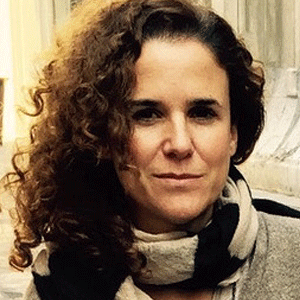
Olatz González Abrisketa
GAIT Principal Investigator, ATMOSFERA Director
She holds a BA in Social Anthropology (1997) and Philosophy (2004), and a PhD (2004) awarded with Extraordinary Distinction. She is an Associate Professor at the University of the Basque Country (UPV/EHU), with Full Professor accreditation and Principal Investigator of the consolidated research group GAIT. She has supervised four doctoral dissertations, all receiving the highest distinction. She is President of the Basque Association of Anthropology (ANKULEGI) and Vice President of the Spanish State Association of Anthropology (ASAEE). She is a member of the consolidated international network RAA, which she coordinated between 2019 and 2022, and serves on the editorial boards of the two Spanish-language anthropology journals indexed in WoS, AIBR and Disparidades.
Her scholarly production includes both written and audiovisual work, a format that has been recognized by ANECA/CNEAI as a research merit in the field of social anthropology. Her research has focused on the identity and gender dimensions of the Basque game of pelota, to which several of her works are devoted, including the monographs Basque Pelota: A Ritual, an Aesthetic (2005), translated into English by the Center for Basque Studies at the University of Nevada in 2012; Raquetistas. Glory, Repression and Oblivion of Professional Women Pelota Players (2022); and the article “Displaced Bodies. Gender, Sport and Cultural Prominence in the Basque Plaza,” which received the AIBR Award for Best Ibero-American Anthropology Article (2013).
During her doctoral training, she undertook research stays at the University of Buenos Aires (2001), the University of Havana (2001), and the University of Nevada, Reno (2002), where she developed an interest in the use of film in research. In this context, she organized the conference series “Pelota and Cinema” (2002) at the Guggenheim Museum Bilbao. During her postdoctoral training (2004–2006), she specialized in Visual Anthropology, including a research stay at NYU, where she directed her first documentary film, Jørgen Leth on Haiti (52’, 2007), published on DVD by the Danish Film Institute and selected for several ethnographic film festivals. In 2007, as a substitute lecturer at UPV/EHU, she organized the workshop “Foldable Fictions” at the Arteleku art center and curated a film series at the Teatro Principal in Donostia. She also promoted and organized a retrospective of Jørgen Leth at the Bilbao Fine Arts Museum (2010).
Parallel to this work, between 2010 and 2013, she was Principal Investigator of two research projects (NUPV09/20 and EHU11/26) focused on visual anthropology, bringing together a total of 15 faculty members from Fine Arts, Audiovisual Communication, Sociology, and Anthropology. During this period, she directed Carmen (2011), which won the award for Best Ethnographic Short Film from the American Anthropological Association (2012); coordinated the NAFA Ethnographic Film Festival (2013); and initiated the production of Pelota II, a documentary co-directed with Jørgen Leth. The film was selected for several A-category festivals, released theatrically in 2016, acquired by EiTB, and screened in film series at the Centre Pompidou (2019) and the Basque Film Archive (2023), among others.
During this period, she also designed the Master’s Degree in Social Anthropology at UPV/EHU, which she directed from March 2017 to February 2020, and undertook a six-month research stay as a Visiting Scholar in the Department of Anthropology at the University of Virginia (2016), where she began her research on the materiality of recognition and male solidarities. In these years, she published widely cited articles such as “The Ontological Turn in Contemporary Anthropology” (2016, co-authored with Carro-Ripalda) and curated the exhibition Jokoak. Matter and Challenge for the San Telmo Museum in Donostia, on the occasion of the European Capital of Culture celebrations (2016).
Since then, she has published in Q1 journals such as IJHS (2018) and Signs (2020), in addition to the monograph Raquetistas (2022); premiered the film Somewhat Wild (2023, co-directed with A. Gutiérrez); and edited Animals and Anthropology (CSIC, 2024, co-edited with S. M. Cruzada). She was also invited to the prestigious Wenner-Gren Symposium “Racialized Bodies, Athletic Experiences” (8–14 March), the outcomes of which will be published in 2026 in a special issue of Current Anthropology (Q1).