
Sara Mingorria
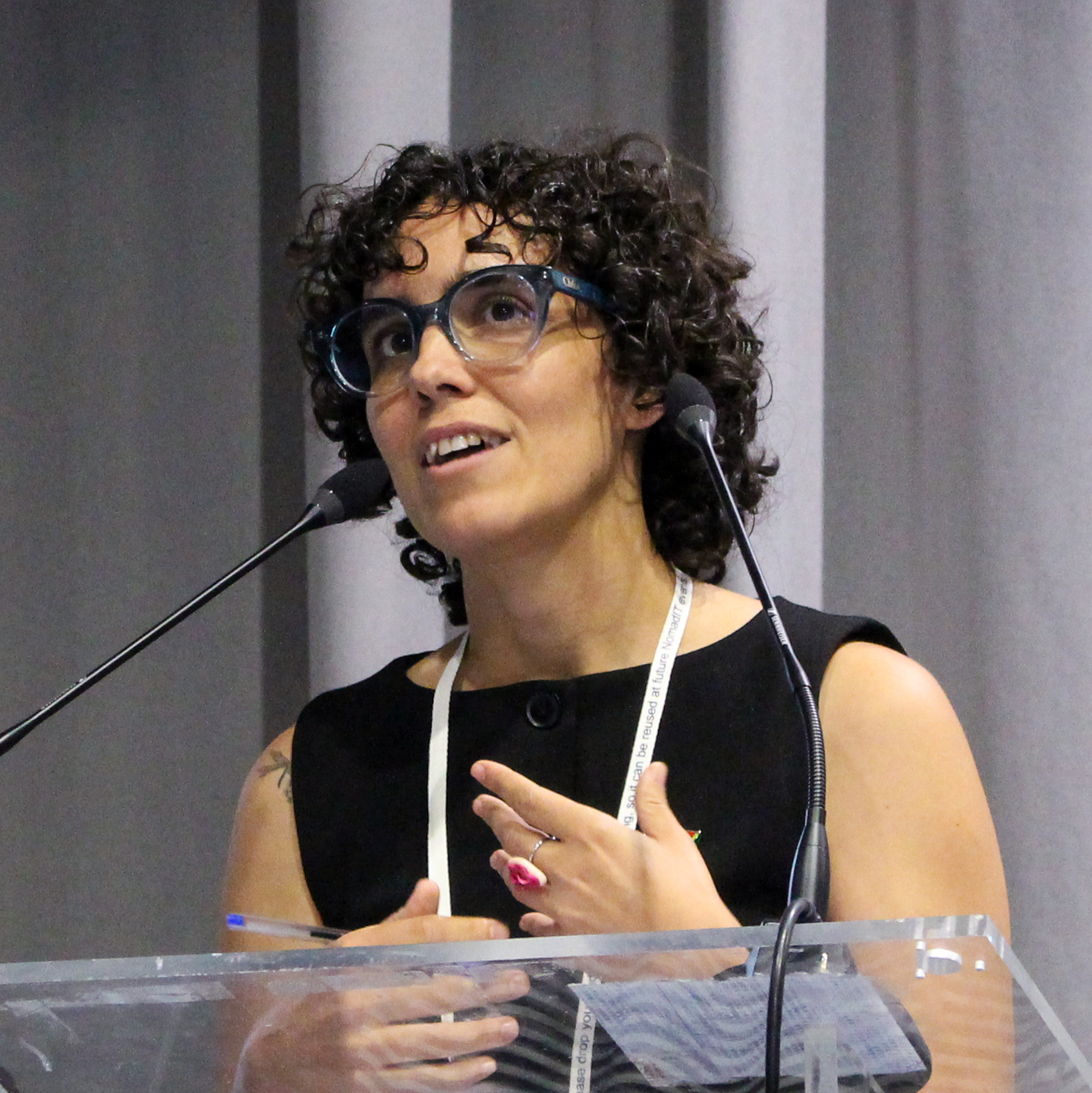
Sara Mingorría is a Ramón y Cajal Research Fellow in the Department of Sociology and Social Work at the University of the Basque Country / Euskal Herriko Unibertsitatea (EHU).
She holds an International PhD in Environmental Sciences from the Institute of Environmental Science and Technology at the Universitat Autònoma de Barcelona (ICTA-UAB), a Master’s degree in Environmental Studies, specialising in Ecological Economics, from the same university, and a degree in Environmental Sciences from the Universidad Autónoma de Madrid (UAM), where she completed part of her studies at the Pontifícia Universidade Católica do Rio de Janeiro (PUC).
She has developed her research career across Europe, Latin America and Asia, undertaking research stays at the Facultad Latinoamericana de Ciencias Sociales (FLACSO-Guatemala), the Instituto de Estudios Agrarios y Rurales (IDEAR-CONGCOOP) and the Universidad de San Carlos de Guatemala (USAC), as well as at the Center for International Forestry Research (CIFOR) in Indonesia.
Her research interests lie primarily in environmental and rural sociology, in dialogue with political ecology, critical agrarian studies, human geography, social anthropology and feminist studies. Her main research lines address social inequalities and territorial transformations, with particular attention to socio-environmental conflicts and the different forms of violence associated with extractive processes. She also studies social movements, collective resistance and the defence of the commons that emerge in response to these transformations. From an intersectional and transdisciplinary perspective, she examines how power relations and inequalities of gender, class and ethnicity shape these processes. Her work seeks to build bridges between science, education, social engagement and artistic practices, exploring collaborative and creative ways of producing and sharing knowledge.
Her research combines quantitative and qualitative methods, integrating large-scale comparative analyses with in-depth case studies. Through a methodological approach committed to social transformation, she works with participatory action research, feminist methodologies and arts-based research, incorporating creative methods for the co-production of knowledge. Her doctoral research was based on ethnographic work with Maya-Q’eqchi’ communities in Guatemala, focusing on agrarian conflicts and the territorial, community and household transformations associated with the expansion of oil palm and sugarcane. She subsequently conducted in-depth case studies in Indonesia and Catalonia on conflicts related to extractive activities, large-scale infrastructure and socio-ecological transformations.
She has published in international scientific journals including Global Environmental Change, The Journal of Peasant Studies and Nature Reviews Biodiversity, among others.
She is a co-founder of FRACTAL, an interdisciplinary collective of women researchers conducting collaborative and participatory research from feminist perspectives. She also co-founded the Rural Systems Analysis Group at ICTA-UAB, dedicated to the study of rural transformations. She also initiated and coordinates an international research group on conflicts related to airport expansion, linked to the international Stay Grounded network.
She has coordinated national and international projects and working groups on land grabbing (POLELUC, FP7); food systems and global and local value chains (GLAMUR, FP7); monoculture expansion and agrarian conflicts in Guatemala (Participatory Reflection on Land Grabbing and Land Concentration); gender and peasant economies (Participatory Analytical Assessment of the Role of Women in Peasant Economies); participatory methodologies and cultural expressions of environmental justice movements (Transcultural Expressions of the Environmental Justice Movement); and gender and airport conflicts (Mapping Airport Conflicts, Gender and Climate Justice). She served as scientific coordinator in the project A Global Movement for Environmental Justice: The EJAtlas (EnvJustice, ERC Advanced Grant), where she worked on the development and analysis of the Environmental Justice Atlas (EJAtlas), an international citizen science platform that documents socio-environmental conflicts worldwide and enables their comparative analysis.
She has contributed to rural development policy processes in Guatemala and to human rights advocacy before the United Nations Human Rights Council and the Inter-American Commission on Human Rights. She has also presented research findings on socio-environmental conflicts and large-scale infrastructure at the Parliament of Catalonia and the Spanish Congress of Deputies.
She has also brought her social research into the audiovisual field, contributing to the research and production of documentaries on socio-environmental conflicts, territorial dispossession and resistance, including Aj Ral Ch’och’ – Sons and Daughters of the Earth: Dispossession and Resistance in 21st-Century Guatemala (2012), recognised at the Bilbao International Festival of Invisible Cinema (2013); El oro o la vida [Gold or Life] (2010), awarded the Survival International Prize at the Barcelona Human Rights Film Festival (2013); and Desalojos en el Valle del Polochic [Evictions in the Polochic Valley] (2011), broadcast on several television channels in Guatemala. She has also engaged in science communication through the press, radio, television and podcasts, including her participation in the Vuelos insostenibles [Unsustainable Flights] report for Informe Semanal (RTVE, 2019).
She has taught undergraduate and postgraduate courses in sociology, geography, rural development, environmental sciences, political ecology, anthropology and political science at universities in Spain, the Netherlands, Mexico, the United Kingdom, Guatemala and Costa Rica. At the Universitat de Girona, she designed and coordinated courses in the Bachelor’s Degree in Geography, Territory and Environment and the Master’s Degree in Environmental Change and Socio-ecological Transition. She has also designed and taught courses in the Master’s in Political Ecology, Degrowth and Environmental Justice at UAB and the Master’s Degree in Mountain Area Management, coordinated by the Universitat de Lleida. She also has experience supervising doctoral theses, Bachelor’s dissertations and Master’s theses.
Her doctoral dissertation received the LASA/Oxfam America Martin Diskin Dissertation Award (2018), awarded by the Latin American Studies Association and Oxfam America in recognition of the integration of academic research and social engagement. In 2019, she also received the ICTA-SS Award for her work integrating art, research and education in the study of socio-environmental conflicts.
More information about her publications and research career is available on ResearchGate and LinkedIn.