
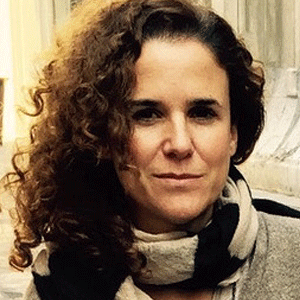
Olatz González Abrisketa
Principal Investigator

Benjamín Tejerina
Co-Principal Investigator
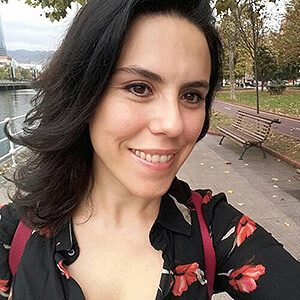
Ignacia Perugorría
Coordinator
GAIT Gizarte Aldaketa Ikerketa Taldea / Social Change Research Group (IT-1469-22; GIC21/63) focuses its work on understanding the socio-economic, cultural, political, ecological, and technological transformations that shape contemporary society.
Research Lines
It addresses the common thread of social change through five interconnected lines of research that enable the analysis of diverse and complex phenomena.
1.IDENTITIES AND SUBJECTIVITIES
Foundational for both the group and the CEIC, this line of research examines the processes through which collective and individual identities are constructed, transformed, and contested, analysing how they take shape in relation to socio-economic, cultural, political, and ecological structures. It explores phenomena such as tensions between the local and the global, the rural and the urban, and the traditional and the contemporary, as well as the ways in which identities are interwoven with questions of gender, class, ethnicity, and territorial belonging. From a critical perspective, it investigates how these identities are negotiated, resisted, and reconfigured in contexts marked by social and cultural change, political struggles, and socio-ecological crises, giving rise to new subjectivities. Special attention is also paid to symbolic and narrative forms, as well as to the technologies that mediate these processes in contemporary societies.
2.SOCIAL MOBILIZATION, CITIZEN ENGAGEMENT, AND POPULAR CULTURE
This line analyses social mobilization, citizen participation, and popular culture as central dimensions of social change. It examines organizational, discursive, affective, and symbolic dynamics in local and global contexts of crisis and exclusion, with particular attention to: (1) responses to the risks that the far right poses to democratic systems; (2) struggles against socio-ecological and climate crises; (3) resistance to urban gentrification and touristification; and (4) the defence of social, political, and cultural rights through satire and humor (Horizon HE-CL2-CULTURE24/02) and through popular organizational forms such as festivals, alternative cultural events, self-managed spaces, or memory-activism initiatives. With more than two decades of trajectory, this is one of the pillars of the group, consolidating its relevance and international projection.
3.SOCIO-ECOLOGICAL CHALLENGES: TERRITORY, INFRASTRUCTURES, AND COMMONS MANAGEMENT
This line addresses the impacts and transformations derived from socio-economic and ecological crises, analysing their effects on social relations in rural and urban contexts, on material infrastructures, and on the relationships between humans and other living beings. It pays particular attention to: (1) energy transition processes, the challenges of climate change, and emerging forms of socio-ecological governance, exploring mechanisms of adaptation, sustainability, and resilience; and (2) the cross-border issues affecting the territories in which the group is embedded, including questions of environmental justice, citizen participation in the management of common goods, and the reduction of social inequalities. This line situates the group at the forefront of contemporary debates on political ecology, climate justice, and global sustainability.
4.EXPERT SYSTEMS, LANGUAGE, AND ARTIFICIAL INTELLIGENCE
This line analyses how various processes of mediation between people, (1) devices, (2) infrastructures, and (3) non-human agents transform everyday life and generate dynamics of social change. In particular, we investigate how the digital, the technical, and the ludic are reshaping what we understand as “social” and “cultural.” This includes AI platforms, machine-translation tools, and self-tracking technologies (e.g., health apps), as well as video games, algorithmic systems, and hybrid environments where humans and non-humans—robots, algorithms, and virtual assistants—coexist. The objective is to understand how these devices not only mediate interactions but also foster new forms of agency, sociability, and creativity, opening pathways for social and cultural transformations previously unimaginable.
5.METHODOLOGICAL, PUBLIC-FACING, AND TEACHING INNOVATION
This line is developed primarily within Atmosfera Lab Bisuala, a laboratory for methodological research, cultural creation, and pedagogical innovation. Its work is structured around three axes: (1) applied research and new thesis formats (creative and industrial), promoting co-participatory research processes with institutions and sociocultural actors; (2) production in new media (film, illustration, fanzines, podcasts), which expand the audiences of research and explore innovative narratives for scientific dissemination; and (3) teaching innovation through the design of active visual-learning methodologies in undergraduate and postgraduate programmes, aimed at fostering the collective production of knowledge. Its purpose is to generate rigorous and innovative research, enhance its social and cultural transfer, and train researchers capable of working in transdisciplinary and creative environments.
Group Composition
GAIT’s trajectory is closely linked to the history of the Collective Identity Research Center (CEIC), founded in 1993 and since then affiliated with the Department of Sociology and Social Work at the University of the Basque Country (EHU).
However, over the past decade GAIT has undergone a significant process of expansion, incorporating leading researchers from six other departments at EHU:
- Audiovisual Communication and Advertising
- Painting
- Philosophy
- Philosophy of Values and Social Anthropology
- Political Science and Public Administration
- Social Psychology
This process was further strengthened by the creation of Atmosfera Lab Bisuala in 2024, affiliated with the Department of Philosophy of Values and Social Anthropology. Through this growth, GAIT has significantly expanded its research agenda, consolidated its multidisciplinary profile, and embarked on a path of methodological innovation and scientific dissemination through new audiovisual formats.