
Teresa Casas Grille
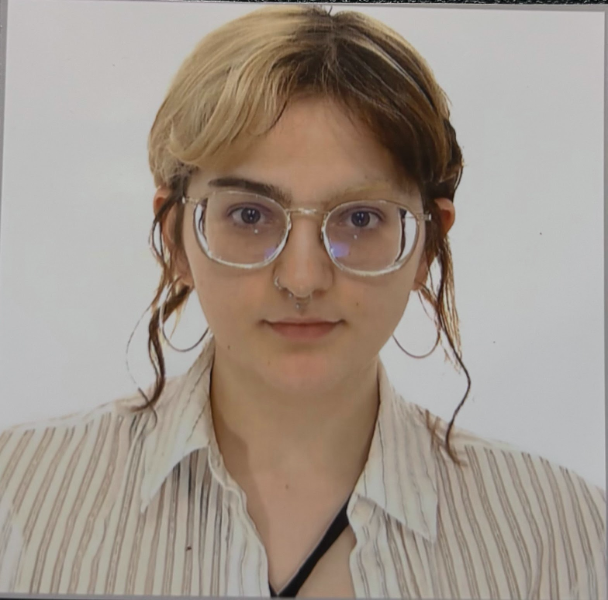
Teresa Casas Grille is an early-career sociologist with a strong academic foundation, a developing publication record, and growing experience in interdisciplinary and collaborative research. She is a predoctoral researcher in the Department of Sociology and Social Work at the University of the Basque Country (UPV/EHU), affiliated with the Doctoral Program in Models and Areas of Research in Social Sciences, where she continues to develop research on legislative processes, discourse analysis, and the emotional and symbolic dimensions of criminal lawmaking in contexts of institutional crisis, as well as ideological and emotional polarization.
She holds a Master’s degree in the Sociology of Law from Oñati’s International Institute for the Sociology of Law (IISL Oñati, EHU–International Sociological Association), where she graduated with a GPA of 9.33/10. Her Master’s thesis (2025), “La construcción de agendas en el discurso legislativo. Ley del solo sí es sí: un análisis de las estrategias discursivas y sus efectos políticos”, examined how parliamentary discourse shaped the legislative process of Spain’s “Only Yes Means Yes” law against gender violence. Supervised by Ignacia Perugorría, it was awarded a grade of 9.7/10 and received the André-Jean Arnaud Prize for the best Master’s thesis of the Oñati International Master’s in Sociology of Law.
She previously obtained a Bachelor’s degree in Sociology (2024) from the University of A Coruña (UDC), graduating top of her class with a GPA of 9.0075/10. During her undergraduate studies, she received the 2023–2024 Extraordinary Bachelor’s Degree Award (Premio Extraordinario de Grado) and the 2024 Academic Excellence Award (Premio Fin de Carrera a la Excelencia Académica) from the Xunta de Galicia. Her undergraduate dissertation investigated how Spain’s “Only Yes Means Yes” law functions not only as a legal reform but also as a vehicle of symbolic politics and punitive populism.
Her research interests lie at the intersection of socio-legal studies, political sociology, gender studies, and environmental justice. In 2024, she worked as a research assistant for the project VICES: Collective Violence during the Independence War, funded by the Spanish Ministry of Science and Innovation, contributing to archival research, transcription and editing of historical documents, database preparation, and outreach activities.
She is the author of a forthcoming article in Justice, Power and Resistance (Bristol University Press), entitled “The Illusion of Green Progress: Galicia’s Wind Power Expansion as a State-Corporate Crime”, which draws on green criminology and sociolegal theory to examine socio-ecological conflicts linked to the imposition of “green growth” narratives in Galicia’s wind energy sector. She is also preparing an article for the Revista Española de Sociología (RES) that examines how the parliamentary debate surrounding the “Only Yes Means Yes” law transformed criminal law into a space of symbolic and emotional contestation in a context of intense political polarization.
She has also collaborated with the Anthropology Association of the Spanish State (ASAEE), volunteering in the organization and coordination of its conferences, where she gained valuable experience in academic logistics and in fostering interdisciplinary scholarly exchange.
ORCID: 0009-0003-4201-3432