
Carmelo Moreno
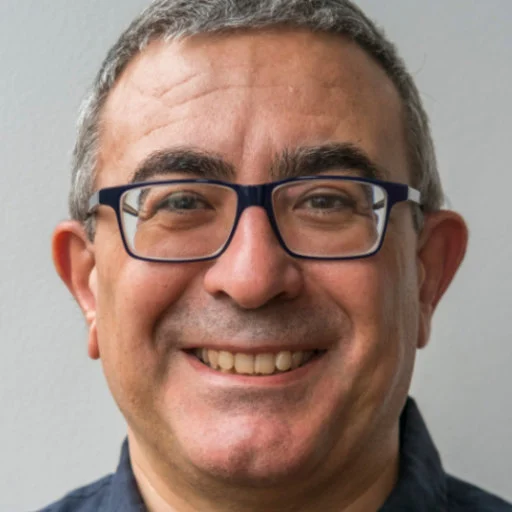
Carmelo Moreno del Río is a Full Professor of Political Science in the Department of Political Science and Public Administration at the University of the Basque Country (UPV/EHU).
His research interests include contemporary political theory, political discourse analysis, collective identity, nationalism and secessionism, conceptual history in political theory, and, more recently, the relationship between humour and politics. He has carried out research stays at the Eurolab of the GESIS–Leibniz Institute (Germany) and at the University of Reno, among others. He was a member of the Consolidated High-Performance Research Group known as the Euskometer Team from its foundation in 1994 until its conclusion in December 2018. He was also the principal investigator of the R&D project “Political humour as a factor of social cohesion in Spain” (2009–2012), funded by the Ministry of Education. Between 2018 and 2021, he participated in the research project entitled “An interdisciplinary approach to the political languages of Euro-American modernity. Spatio-temporal dimensions”, directed by Professor Javier Fernández-Sebastián. Between 2022 and 2024, he joined a European network of universities which, under the umbrella of the Enlight Network—of which the University of the Basque Country is a member—initiated an international research programme on the relationship between humour and politics. This network led to the HACIDA project (HACIDA – Humor and Conflict in the Digital Age), coordinated by Andrew Bricker from Ghent University. This project became the seed of a HORIZON project funded by the European Commission entitled DELIAH (DELIAH – Democratic Literacy and Humor), which began in March 2025 and has an estimated duration of four years. The project involves Ghent University (Belgium), the University of Groningen (the Netherlands), Comenius University of Bratislava (Slovakia), the University of Göttingen (Germany), the University of Tartu (Estonia), as well as the University of the Basque Country.
In the field of teaching, he coordinated the doctoral programme “Government and Comparative Political Analysis” between 2000 and 2007. During this period, the programme received the Ministry of Education’s Quality Award on three occasions (academic years 2002–2003, 2004–2005, and 2005–2006), working in collaboration with around twenty Political Science departments, both in Spain and internationally.
Among his most recent works are: Moreno, Carmelo (2025): “The role of time in political theories of justice: some notes on Hannah Arendt, John Rawls, Michael Walzer and Iris Marion Young,” in J. Fernández-Sebastián and Javier Tajadura (eds.), Tiempos de la Historia, tiempos de la justicia, Madrid, Marcial Pons, pp. 123–144; Moreno, Carmelo (2024): “Thirty years of political theory in Spain,” in J. Montabes, A. Garrido and B. Aldeguer (eds.), Political Science in Spain. Thirty Years of the Spanish Association of Political Science and Public Administration, Madrid, Centre for Political and Constitutional Studies, pp. 101–119; Moreno, Carmelo (2023): “Meritocracy,” Eunomía. Journal of the Culture of Legality, vol. 25, pp. 242–261; Moreno, Carmelo (2022): “Effects of political satire through television infotainment programmes in Spain. Is humour just for laughter, or is there something more at stake?”, Papeles del CEIC, vol. 2022/2, paper 272, pp. 1–22; Moreno, Carmelo (2022): “Satirical humour, the press and caricature in Spain, 1836–1874. A theoretical approach,” in G. Capellán (ed.), Drawing Discourses, Constructing Imaginaries. Press and Political Caricature in Spain (1836–1874), Santander, University of Cantabria, pp. 557–572; Moreno, Carmelo and Bartolomé, Edurne (2021): “Feelings towards politics in the Basque Country, 1995–2019. Explanatory variables, the effect of affective polarization and the importance of context,” Spanish Journal of Political Science, vol. 58, pp. 141–173; Moreno, Carmelo (2020): “Secession as a long-term procedure versus the demand for a single referendum. A regulatory proposal,” Journal of Political Studies, vol. 188, pp. 97–126; Moreno, Carmelo (2020): “The Spanish Plurinational Labyrinth. Practical reasons for criticising the nationalist bias of others while ignoring one’s own nationalist position,” Genealogy, vol. 4, no. 1, pp. 17–38.